Climbing Stawamus Chief - Summer 2026
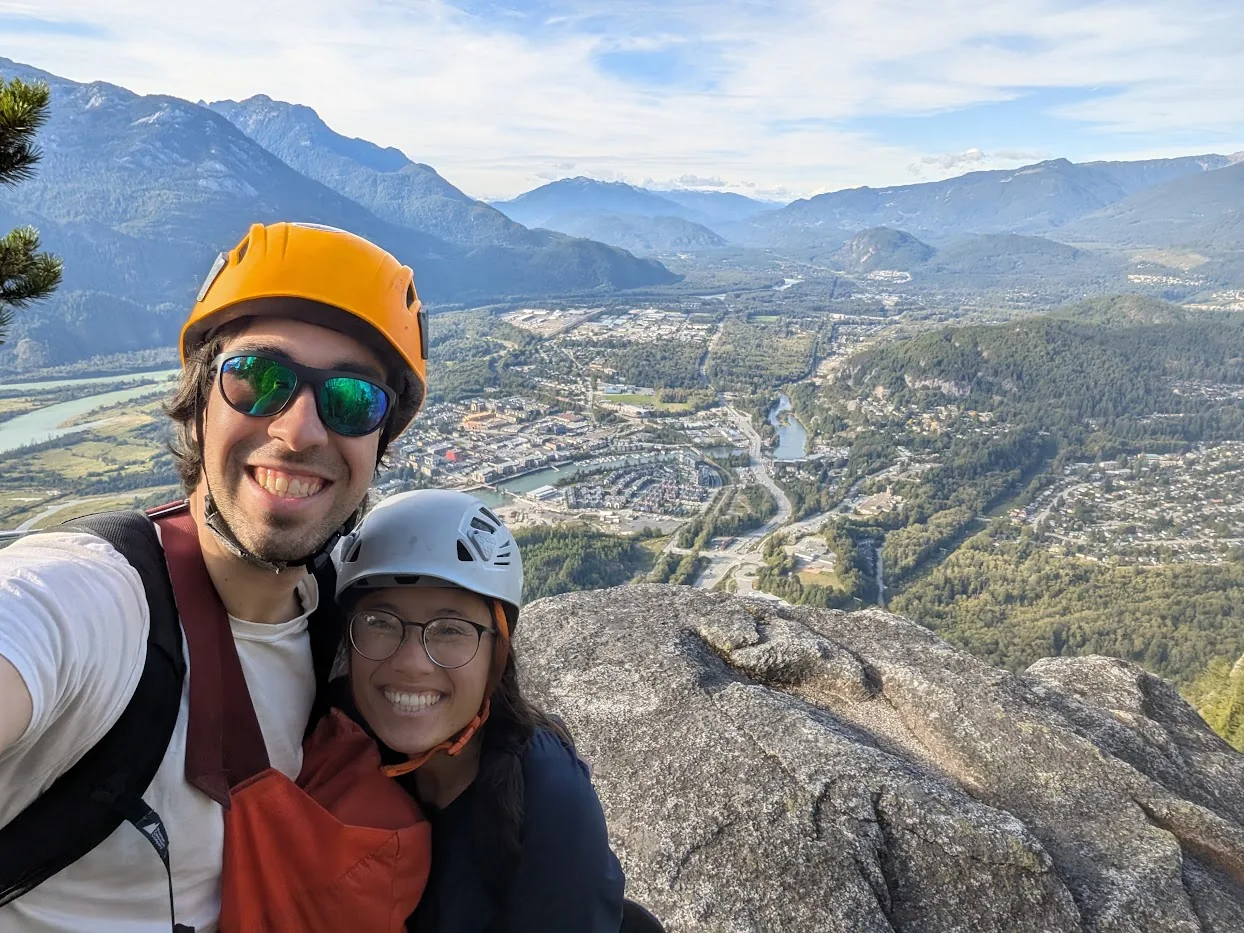
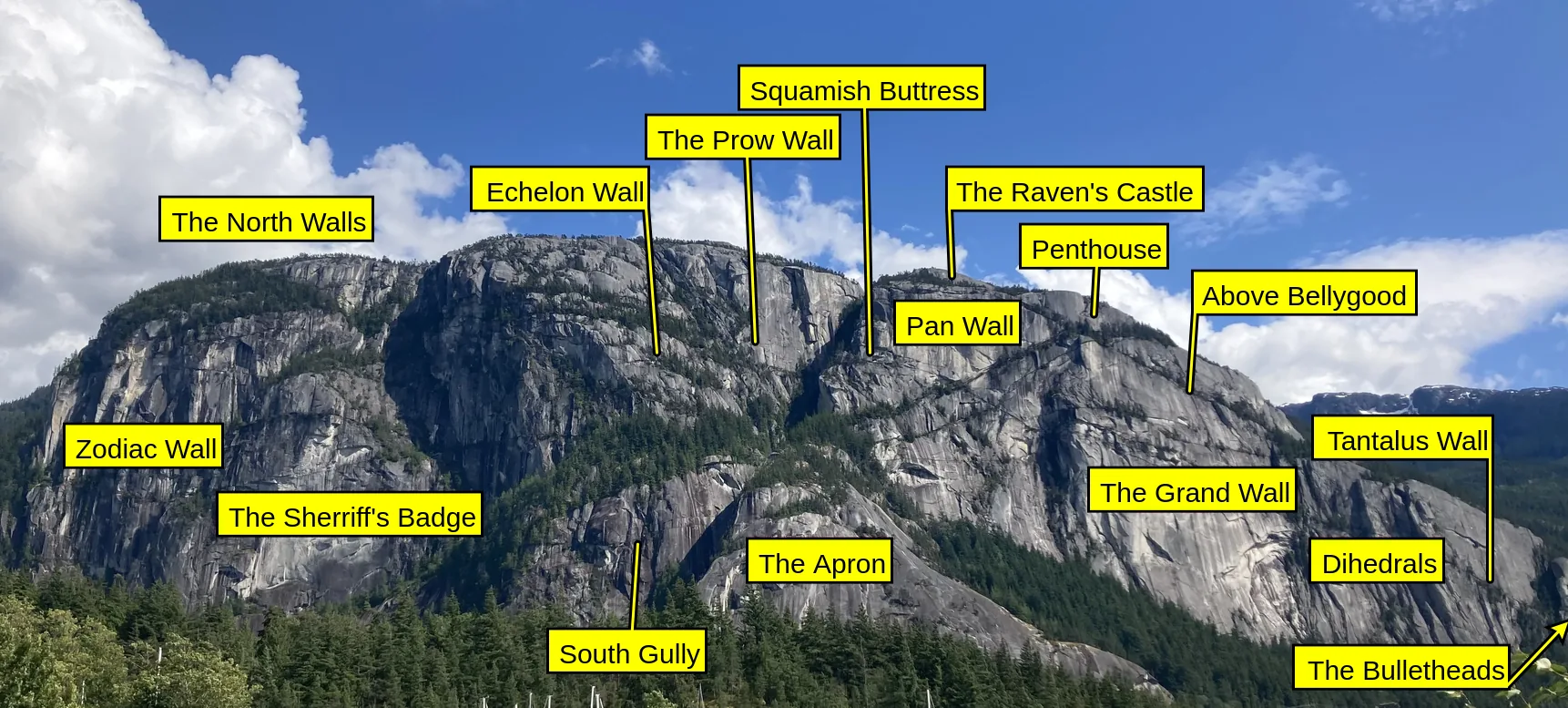
The Stawamus Chief is an imposing dome-shaped mountain made of granite overlooking the town of Squamish, BC. The view from the top offers a clear vantage of the town, the valley, and the snaking river, making it a popular hiking destination. In addition to hiking, the Chief is peppered with hundreds of climbing routes. The various walls contain climbs ranging from long-but-runout moderates to world-class-difficulty single-pitch routes.
I started climbing outdoors four years ago. Ever since I learned that climbing the Chief from bottom to top was something that could be done - or rather something that people do - I wanted to climb it. Over years of building my outdoor skills, my climbing capabilities, my confidence, and my pile of gear, I decided that this summer was going to be the one where I climbed the Chief.
Banana Peel
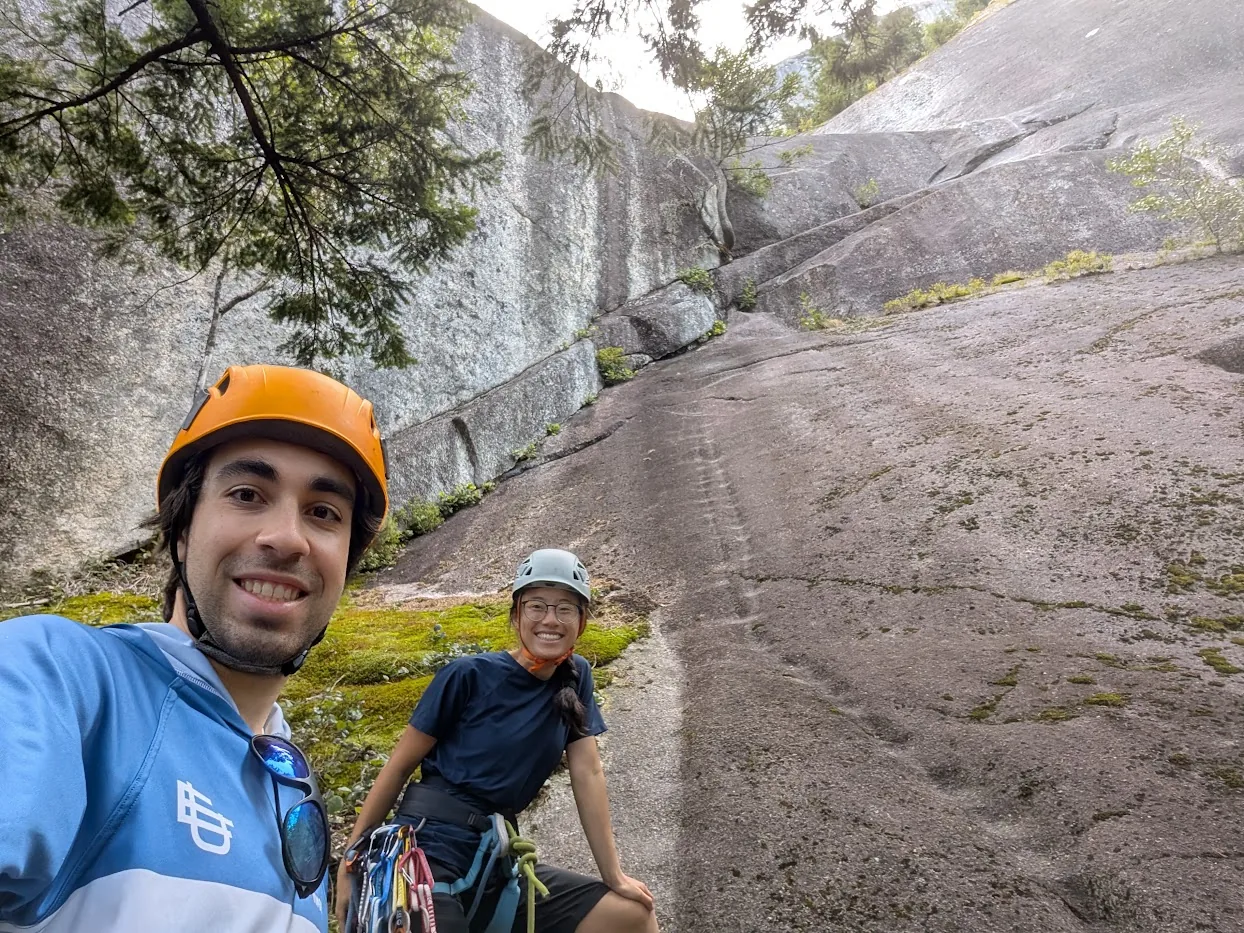
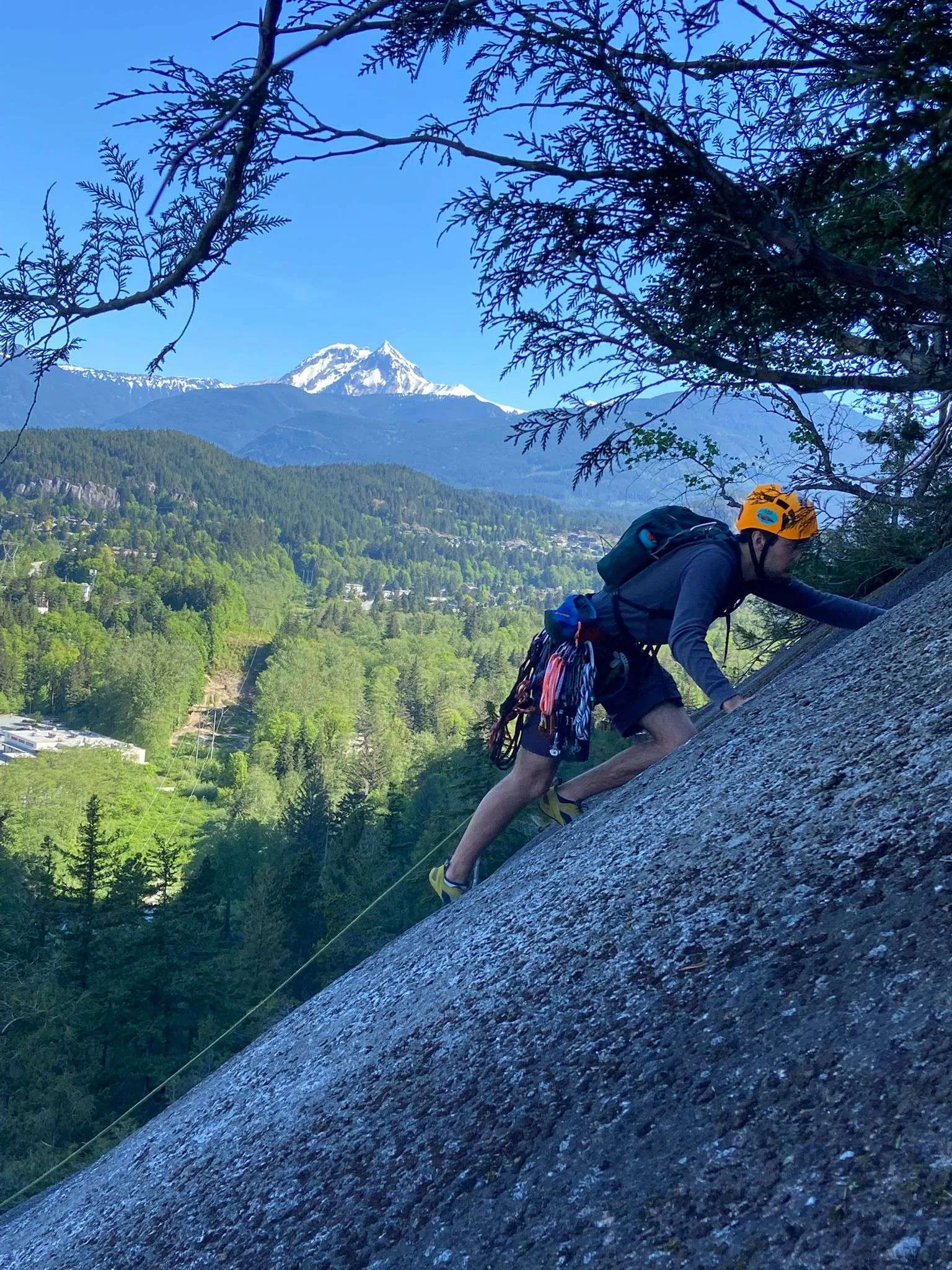
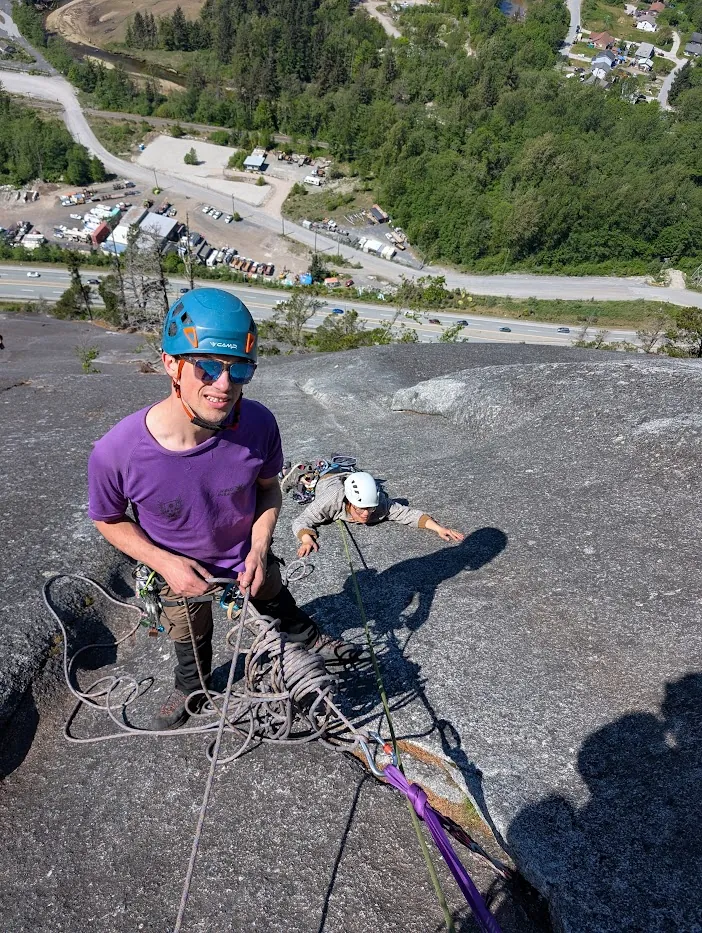
I started off the summer in May climbing Banana Peel, a slab route up the south side of the Apron, with my climbing partner Lillian and two friends Paul and Mo. This climb was more a mental challenge than anything for us. There was a lot going on: it was our first trad multi together; neither of us (nor our friends) had climbed it before; and there were significant runouts. It was scary, but exhilirating. Confusing, but assuring. This was a new kind of challenge, but one that I immediately recognized as one I would be back at time and time again.
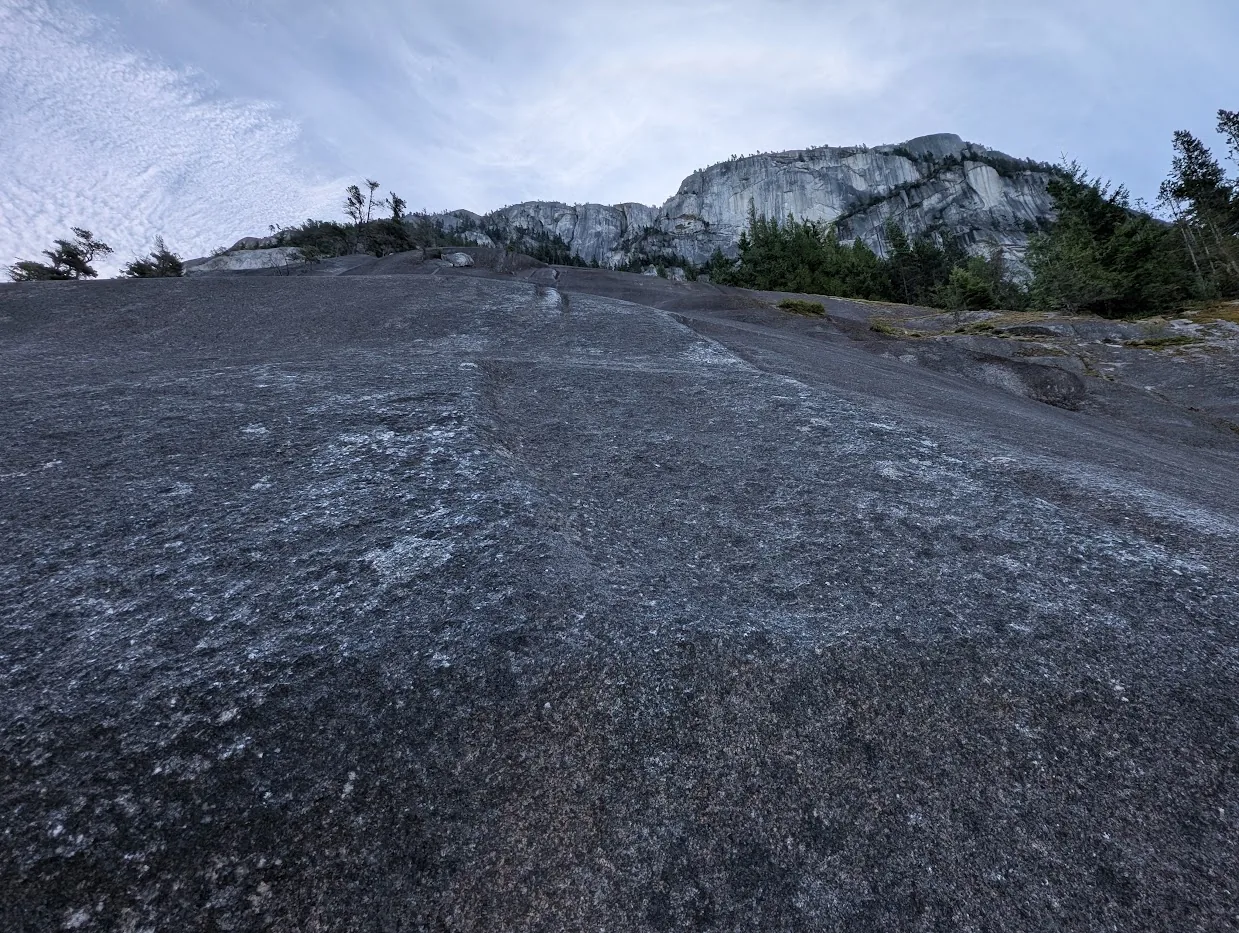
I led most of the pitches, but being scared of the runout on P4 we had our friends bring our rope up allowing both Lillian and I to follow up it. While the approach, rope management, gear placement, and head game were new territory, the climbing was very easy with the hardest pitches cruxing at 5.7 and easiest being low 5th class scrambling. I had a lot of fun and it was a great route to acclimatize us to slab and Apron climbs without wading too far into the deep end. I think many people are scared of runout slab, but given how easy the climbing is, I found this and the other easy Apron slab routes to be good confidence builders.
Long Time No See
A few weeks later, feeling a bit ambitious perhaps, Lillian and I next tried Long Time No See, a harder Apron multi on the North side which was better known for having cracks and gear placement options than slab. What we didn’t do was proper due diligence (or maybe we didn’t understand how to interpret the information) as we quickly found that the first two pitches were some of the hardest of the route including some offwidth sections and a tricky starting move that we weren’t warmed up for. Taking a very slow two hours for the first two pitches, we let our egos deflate a little bit. On the 5.8 slanted crack pitch I had a lot of trouble getting gear placements and making progress and had a fall onto a sloped ledge where I hurt my ankle. We shortly after took an alternate, bolted path around the side, rappelled from the top of P7, and called it a day.
I found the style of climbing on this route to be varied and different from Banana Peel. Overall it was much harder as I hadn’t practiced offwidth or slanted cracks, and my feet were quite sore both from the fall and from a long day wearing my shoes. Lillian and I swapped leads, we both got better at placing gear, got some exposure, and some tapered ambition on Apron routes. In the weeks following this climb we spent some days cragging practicing crack climbing and gear placements at the Smoke Bluffs (Burgers and Fries) and Murrin Park (Splitsville) so we would be ready for the next attempt.
Diedre and Boomstick Crack
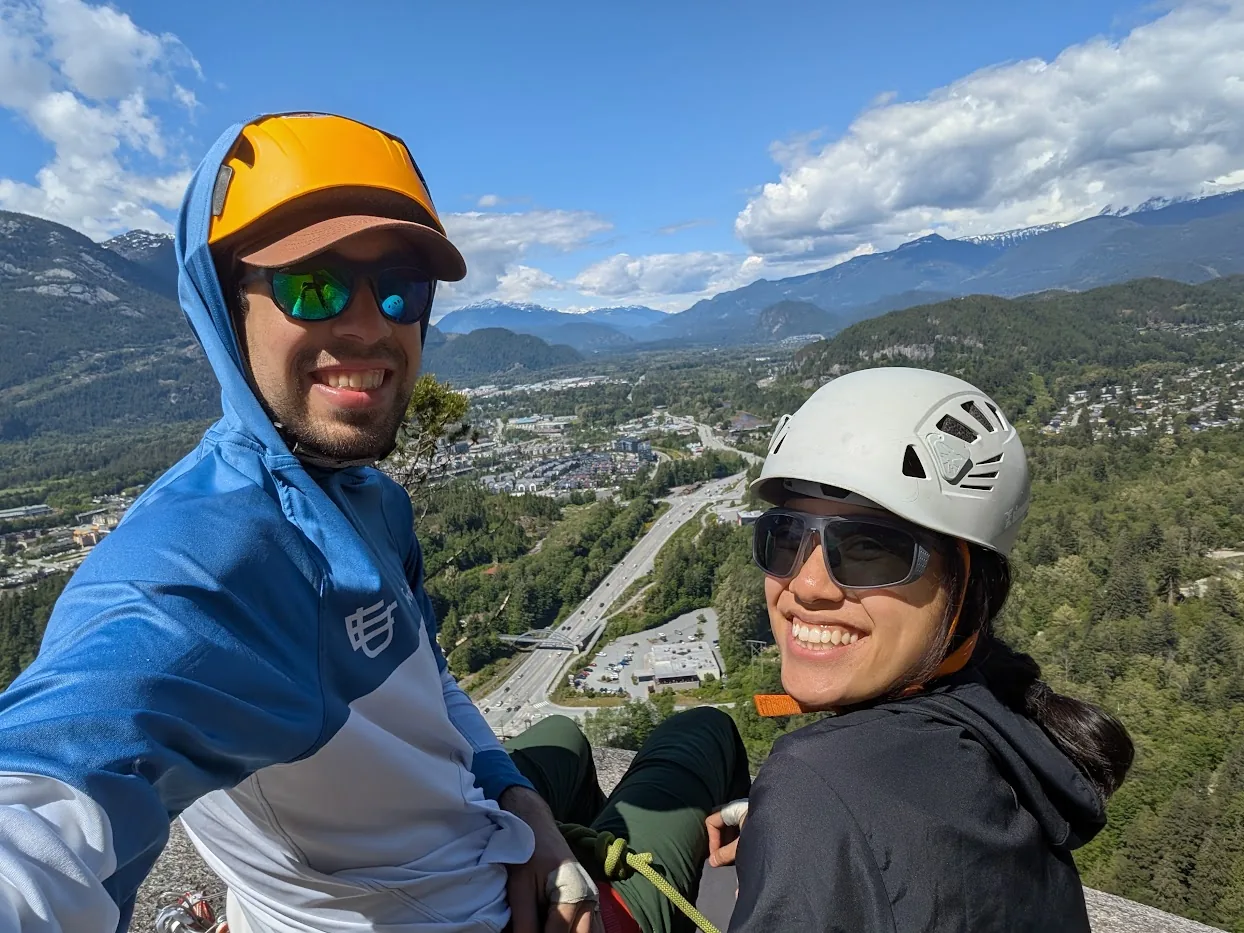
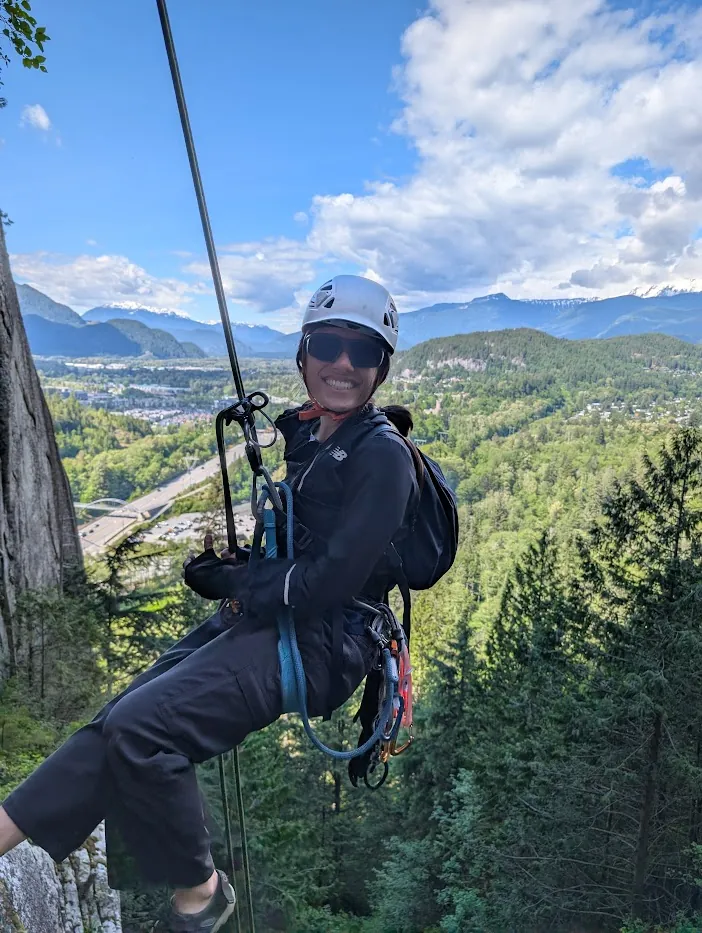
Near the end of July, Lillian and I decided the best objective to continue our journey on would be Diedre, one of the best known routes on the Apron and considered to be a classic. Given its fame, we decided to try a late start around 4pm, hoping that most other people would be done and we would avoid any lines. Having done Banana Peel and practiced some slab and trad, Diedre was a walk in the park. No significant runouts, and in the spots that lacked gear placements the face was slabby enough that we walked up easily.
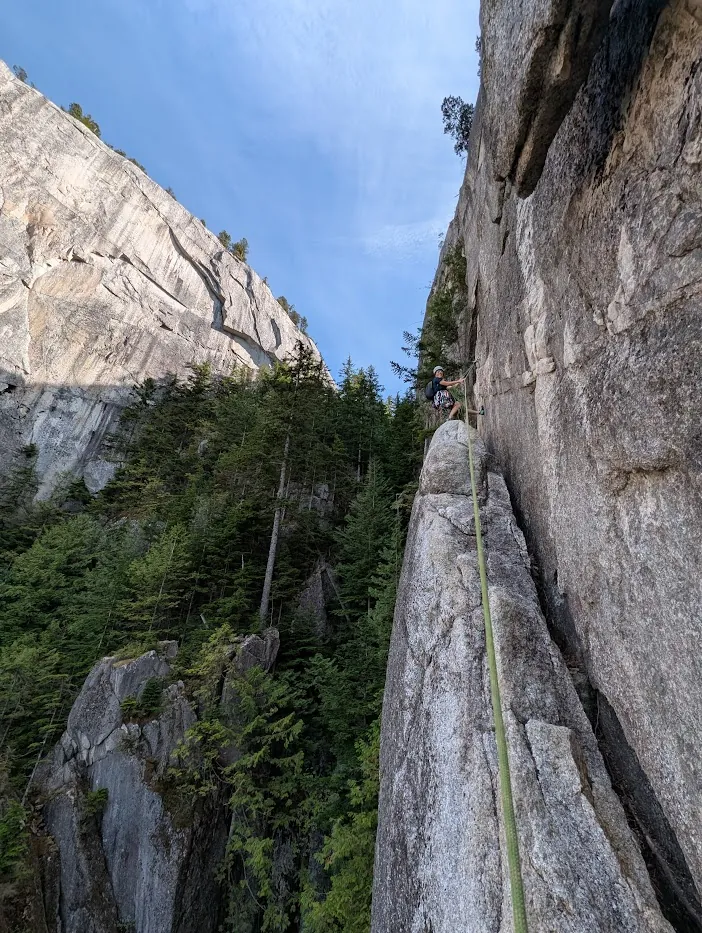
The main line showcased a very cool feature running up the Apron that was very polished led us to the base of Boomstick Crack. Boomstick crack was another incredible climb. We split this into two pitches, though it can probably be done in a single, long pitch. It follows a large flake up the top side of the South Apron leaving the climbers to walk along a sharp flake edge. It ends in some trees where a trail leads further up the Apron. Having successfully acsended both in just three hours, we decided to rappel back down to Broadway Ledge and decend back.
These two climbs were super fun, brought back some of the confidence we had lost on Long Time No See, and started to shine light on the path we planned to take all the way to the top of the Chief.
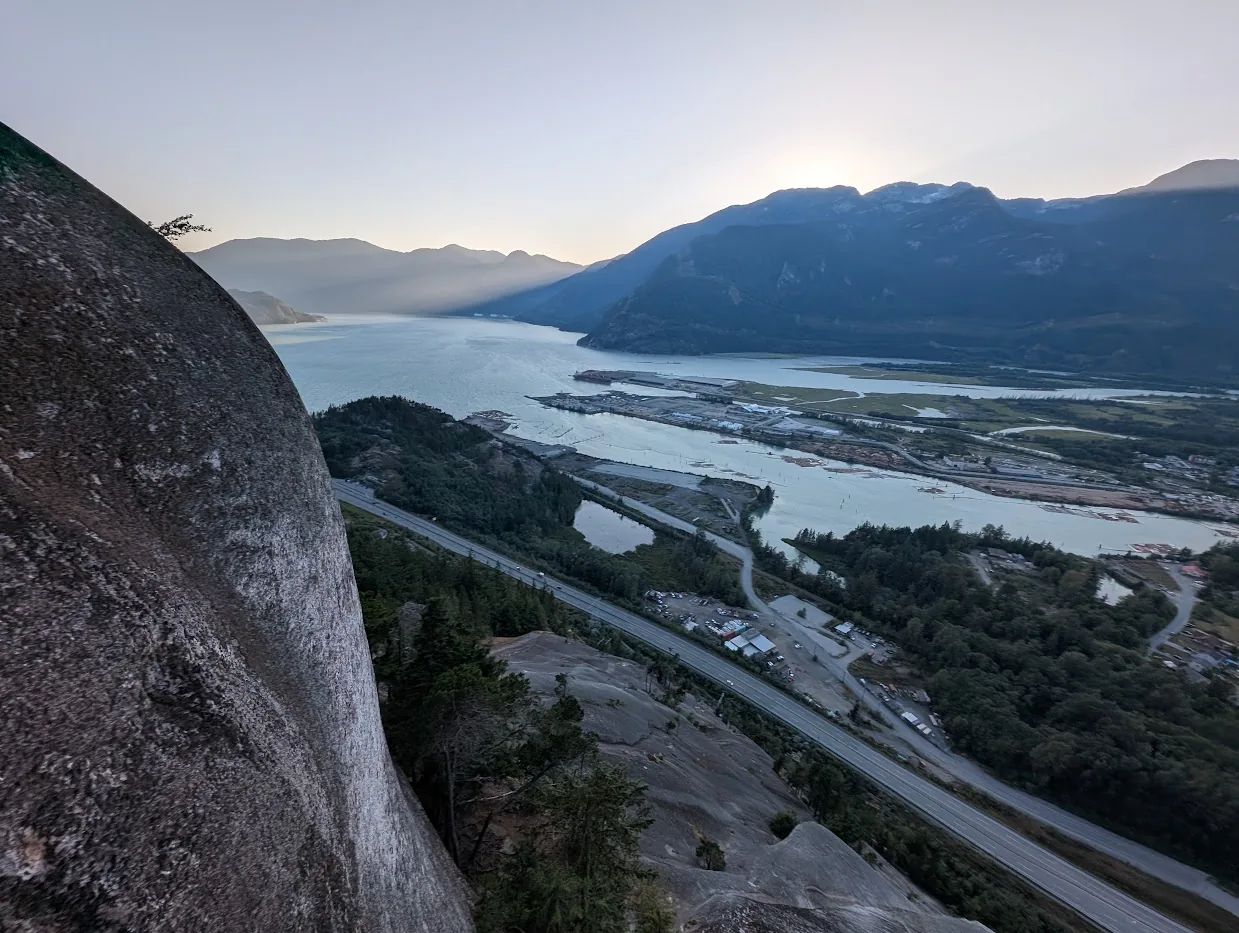
Calculus Crack
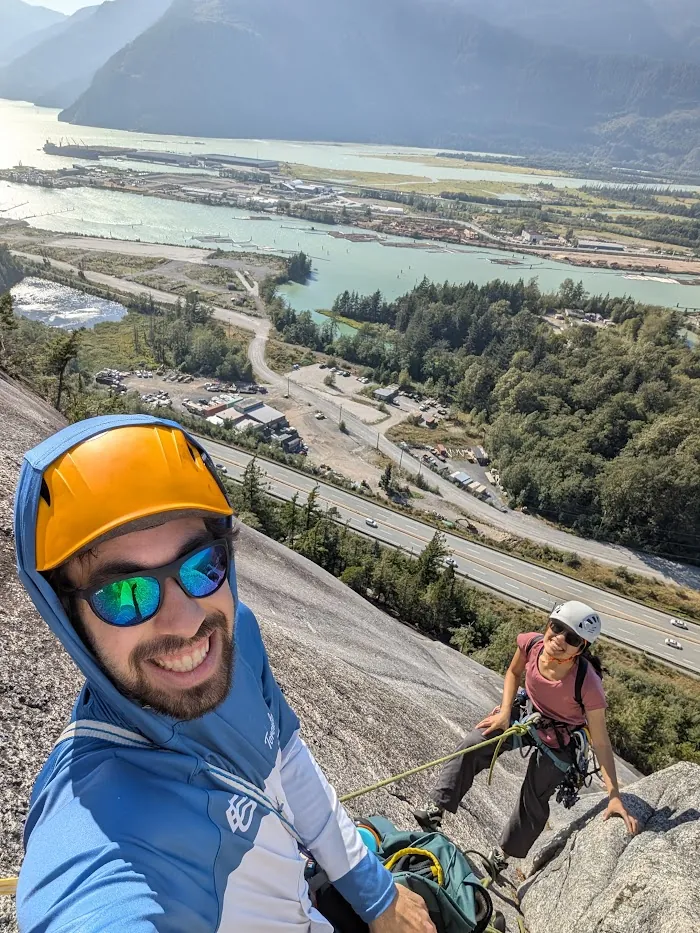
A few weeks later in mid-August, I went to climb another famous line, Calculus Crack, this time with a friend, Chloe. Located on the North side of the Apron, Calc Crack is well known for being a finger crack. Finger cracks are thinner than your average crack and often you can only fit your fingers inside instead of your palms or entire hand. This requires different techniques to climb and for me it was harder that other sizes due to not having much practice.
I followed Chloe on the crux pitch where the majority of the finger sized cracks occur and got up just fine, but I would’ve been on alert if I was the leader. As expected on such a popular route, a lot of the rock was polished a slick, especially on the crux pitch. I had a lot of fun and I resolved to head to Penny Lane both the crag and the specific route to practice finger cracks.
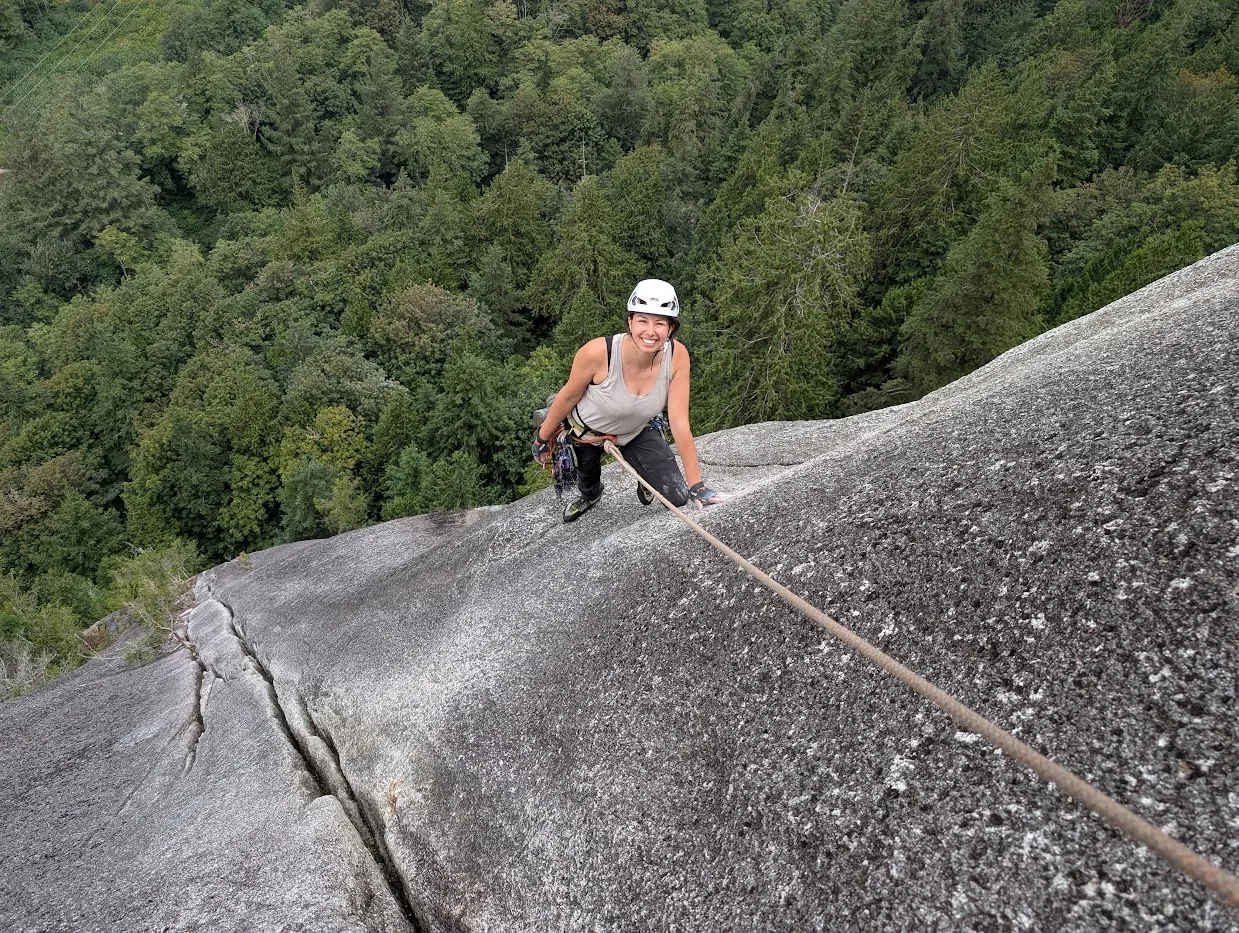
Slab Alley, Boomstick Crack, Squamish Buttress Lite
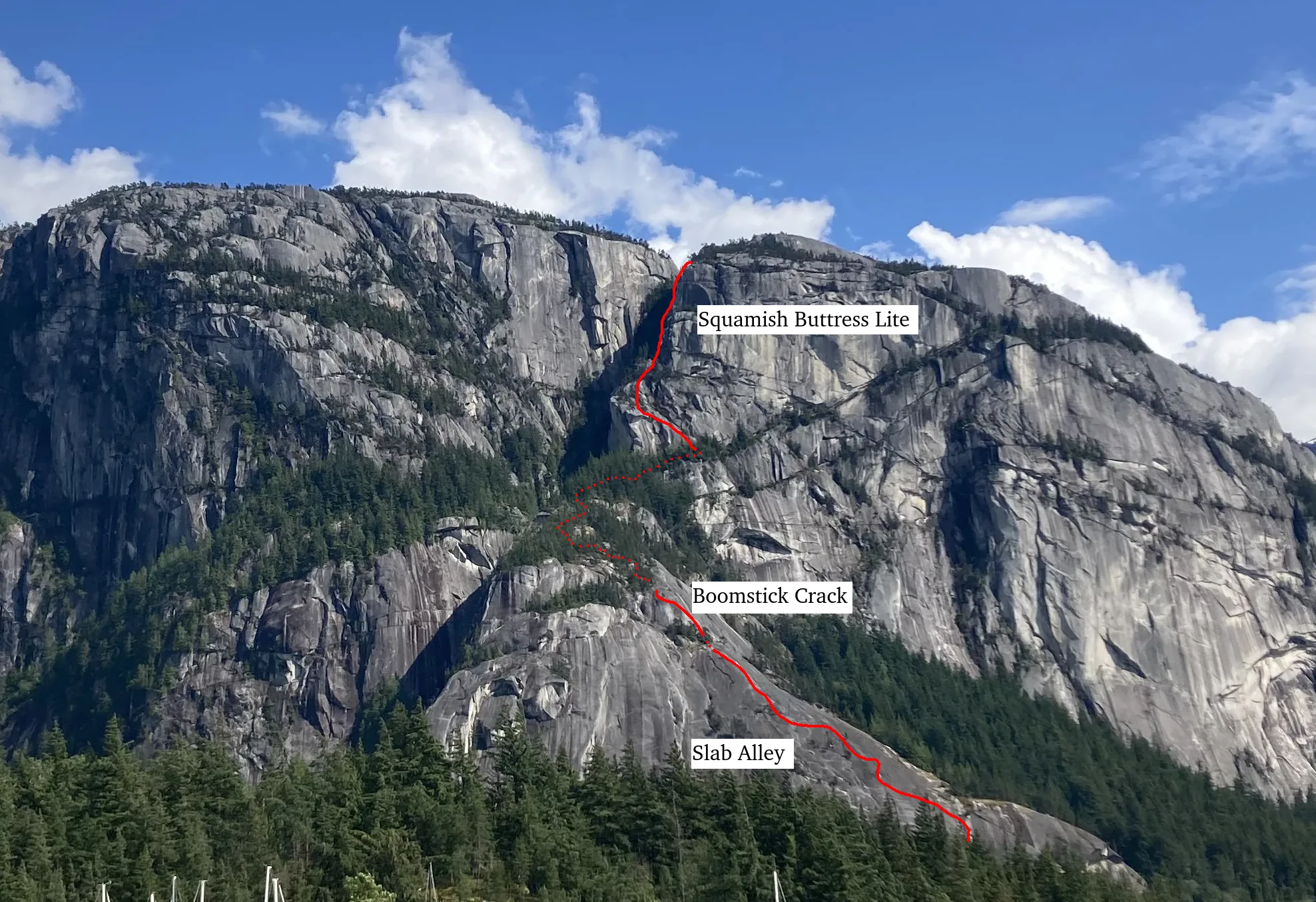
On the last day of August, after two cloudy days with light rain, the sun rose without a cloud in sight. Lillian and I knew this was our chance and we had our line picked out. It would start with Slab Alley which by difficulty and style was quite similar to Banana Peel but a little harder, then Boomstick Crack, followed by finally hiking up to climb Squamish Buttress (Butt lite variation) to the top of the Chief.
We started early, ate and packed our camping gear, drove to the Apron, and hiked up to start climbing by 10am. True to its reputation, Slab Alley was very reminicient of Banana Peel but with additional rock reatures. I found the traverse pitch at the start to be more enjoyable than the Banana Peel traverse and the Elephant Steps pitches with big steps that water had carved over time were a blast.
Continuing up Boomstick Crack, we then switched into comfortable footwear and hiked up to the Squamish Buttress. We passed a group of three guides doing the Community Service variation to the start. Luckily no one was on the standard start, but shortly after I started climbing, three other pairs showed up behind us. After a couple pitches, the group behind us pushed past (quite rudely), but we then diverged from the rest of the parties who were headed up the main line.
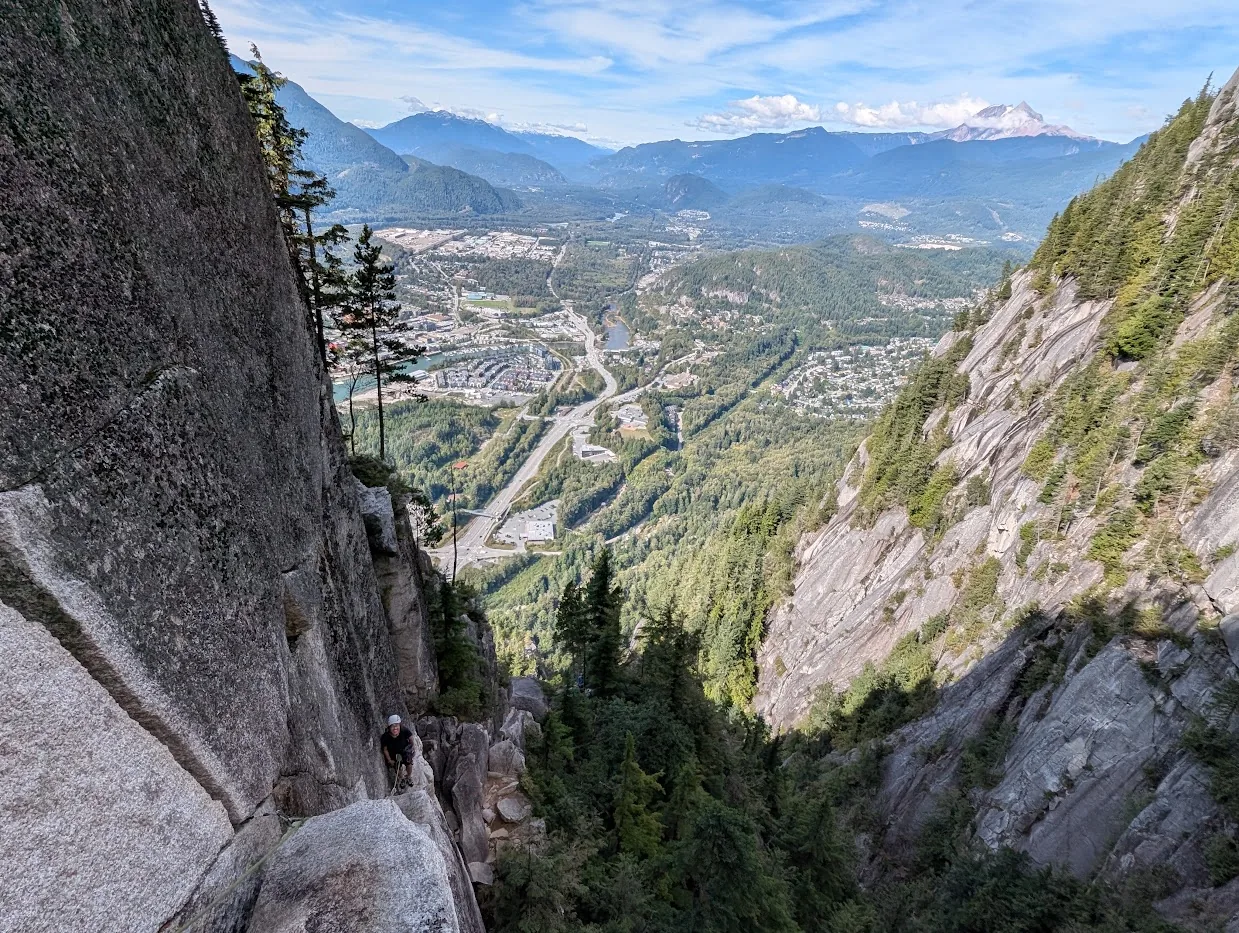
Finally getting some peace, we moved over and started up the crux pitch which was quite vertical and more like face climbing than any of the previous pitches. It followed some ledges in the shade up along the face of the Squamish Buttress instead of the dihederals or cracks that can be much harder. The significant exposure scared me since the combination of face climbing and traversing left a huge drop down below me. It made for some great views and in hindsight the climb was well within my capabilities, but in the moment I felt a bit overwhelmed. Lillian and I made our way up slowly, and began on the chimney pitch.
I have climbed a chimney before and from that I had the sense to dangle my bag below from my personal anchor. But this pitch was no simple task. After a couple unsuccessful attempts, I hung out and looked at the beta before giving it another shot. Following the technique in the guidebook, we made our way swiftly up the last couple pitches and enjoyed the view while eating the rest of our snacks. Finally we began the long decent and made it back to the car at 7pm for a 9-hour day of climbing.
Summer 2026 goal complete ✅