First Multi-Pitch - Fall 2024
Multipitch climbing is a type of rock climbing done is pairs where the route is split into sections called “pitches,” each roughly one rope length. The first climber, the lead climber, ascends each pitch and sets an anchor. The second climber follows, removing any protection set by the first. This process repeats until reaching the top.
People engage in multipitch climbing for many reasons: to challenge themselves, for the adventure, to see incredible views, or for the sport.
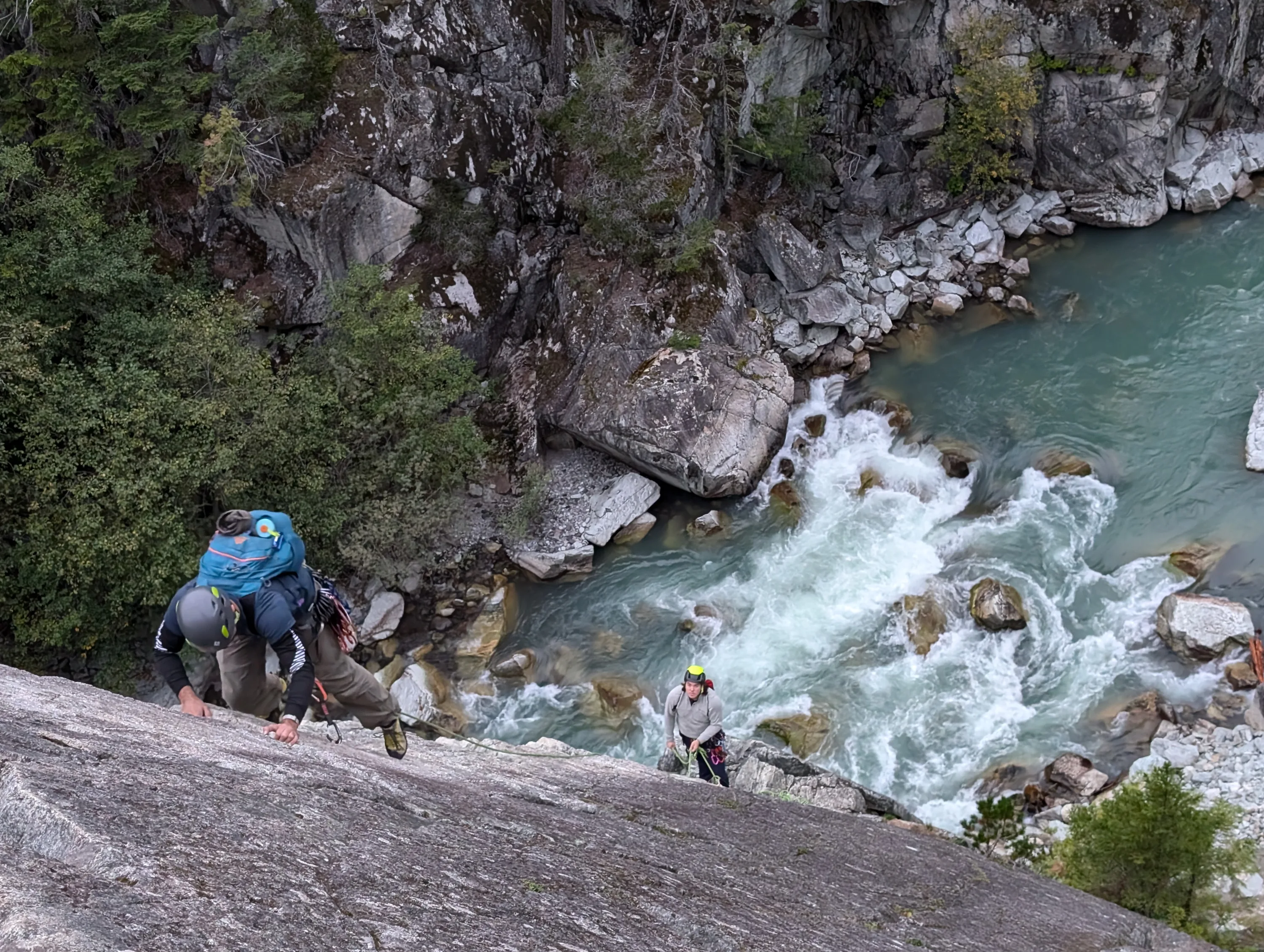
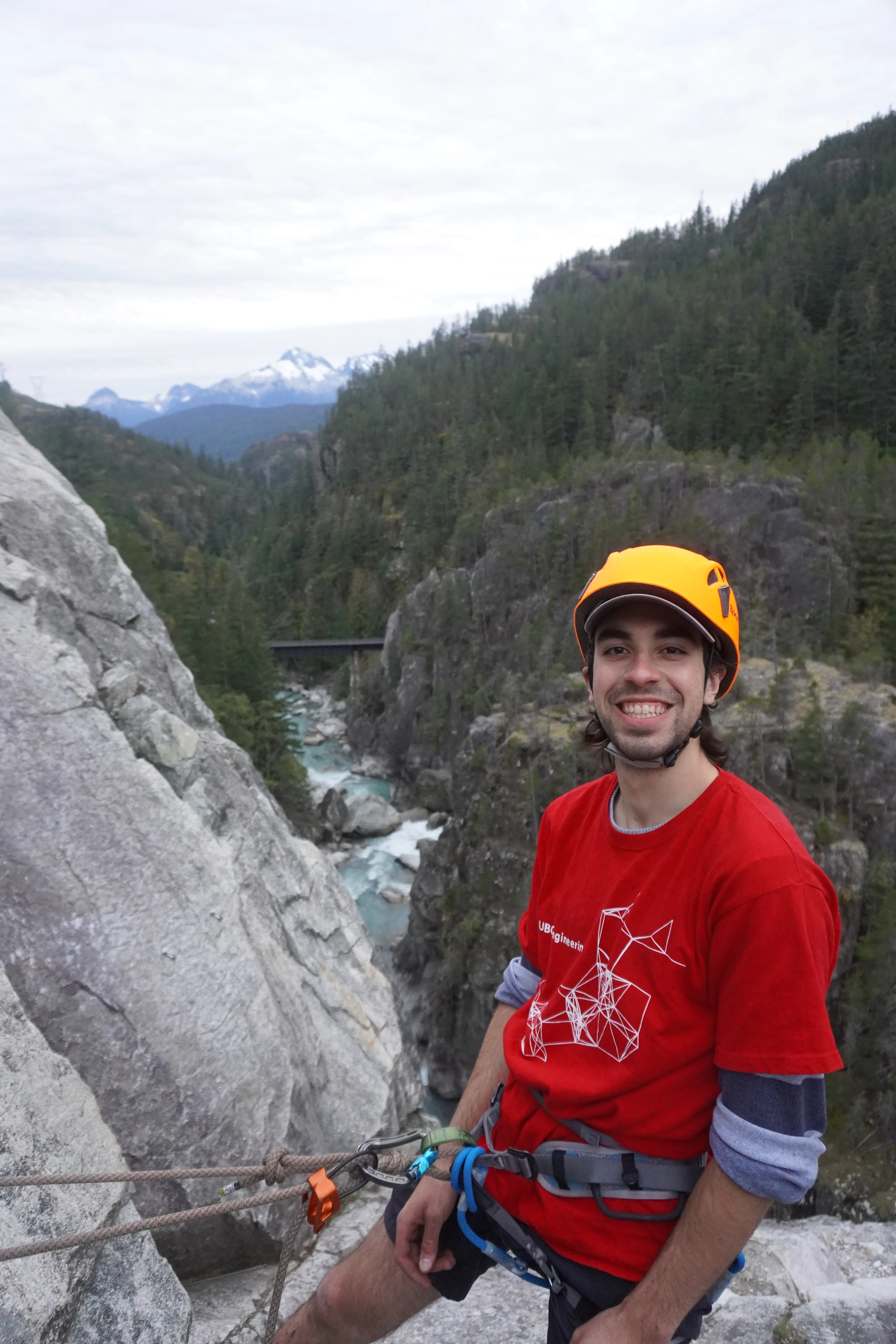
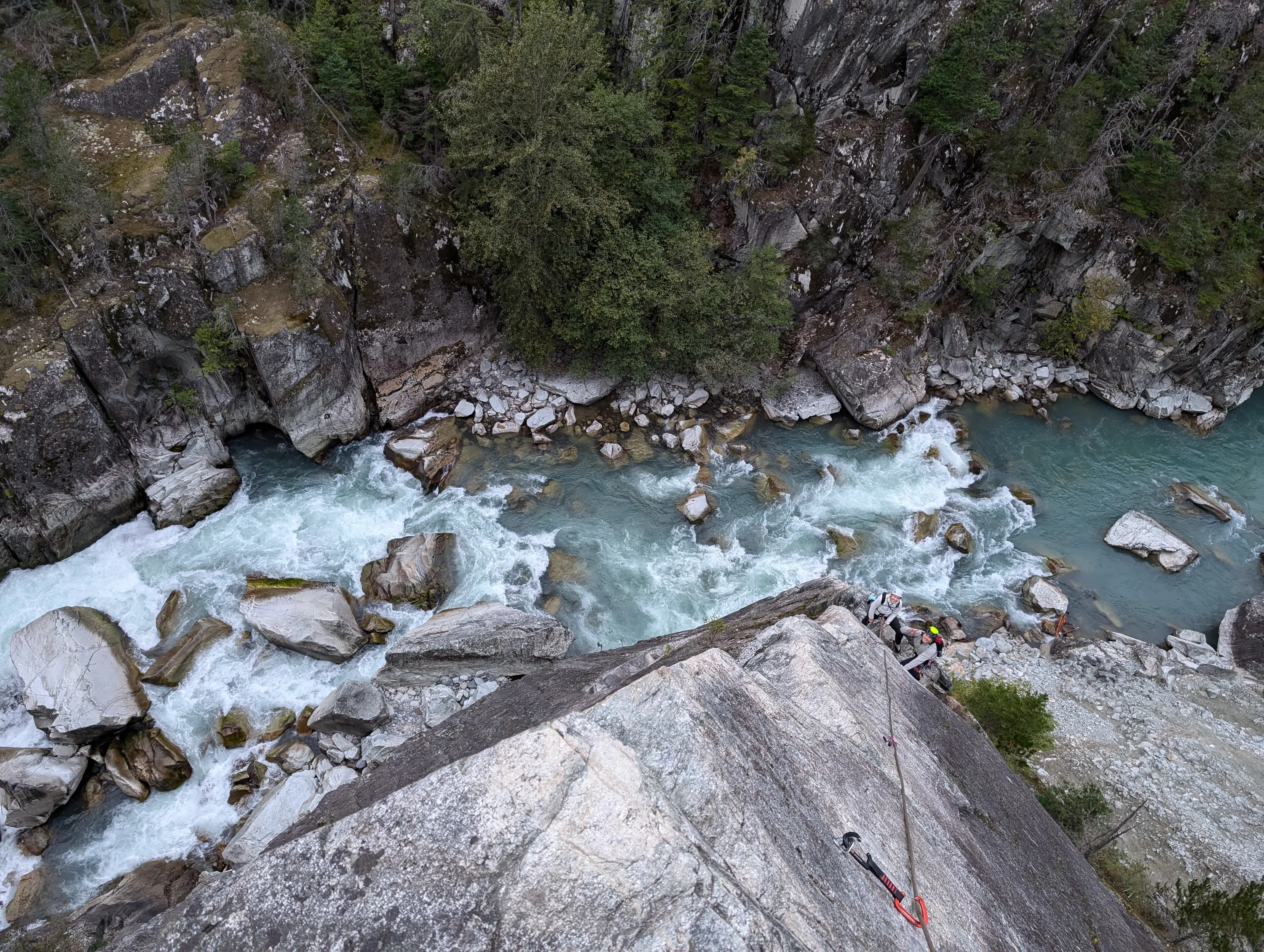
My main motivation for multipitch climbing was for the exploration and the sport. Compared to sport climbing for example, multipitching offeres much more climbing in a given amount of time. On a regular day at a crag, I might climb up to 8 climbs (or pitches), meanwhile on this trip (my first and likely a slow introduction) I climbed 14 pitches.
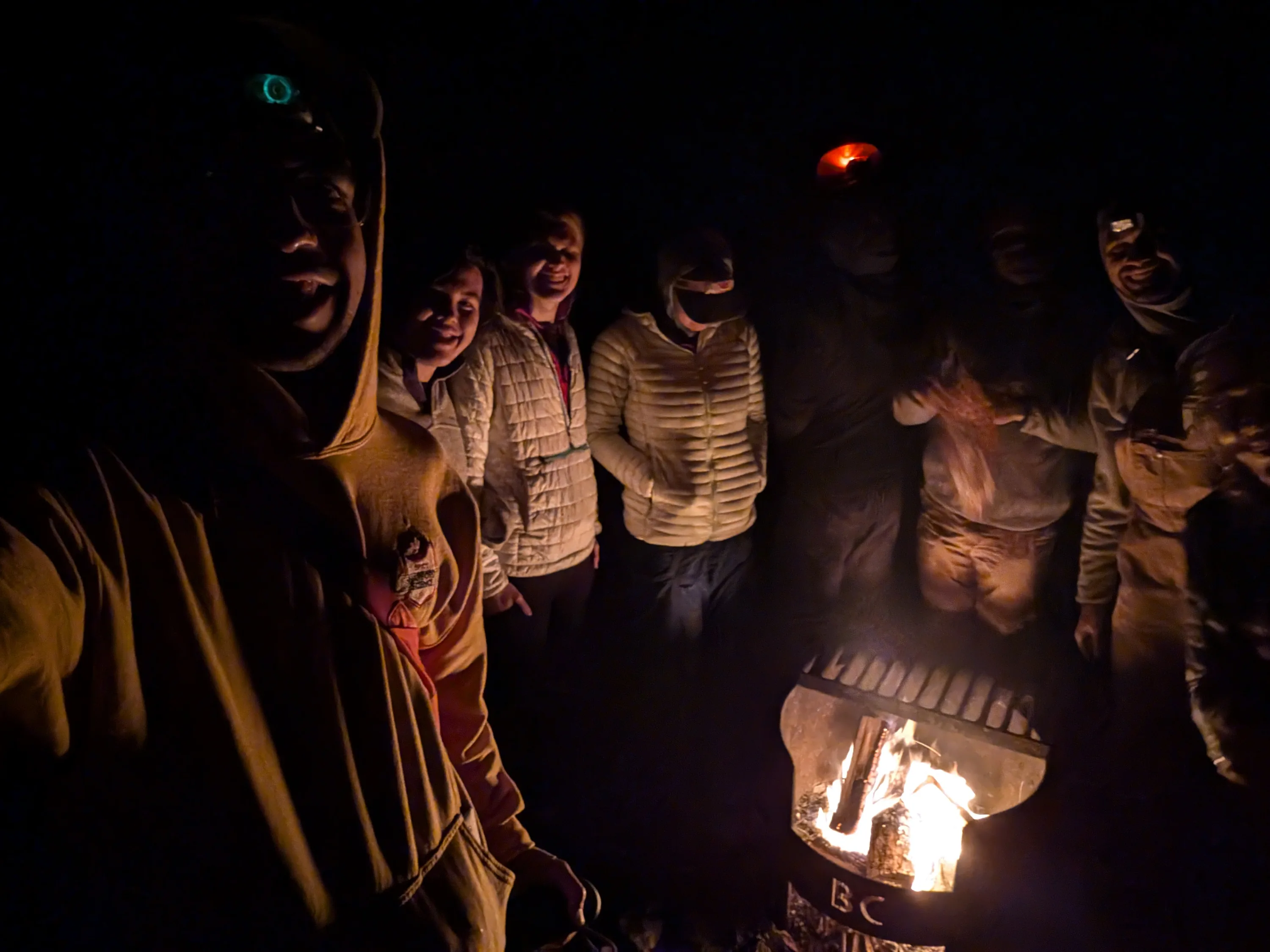
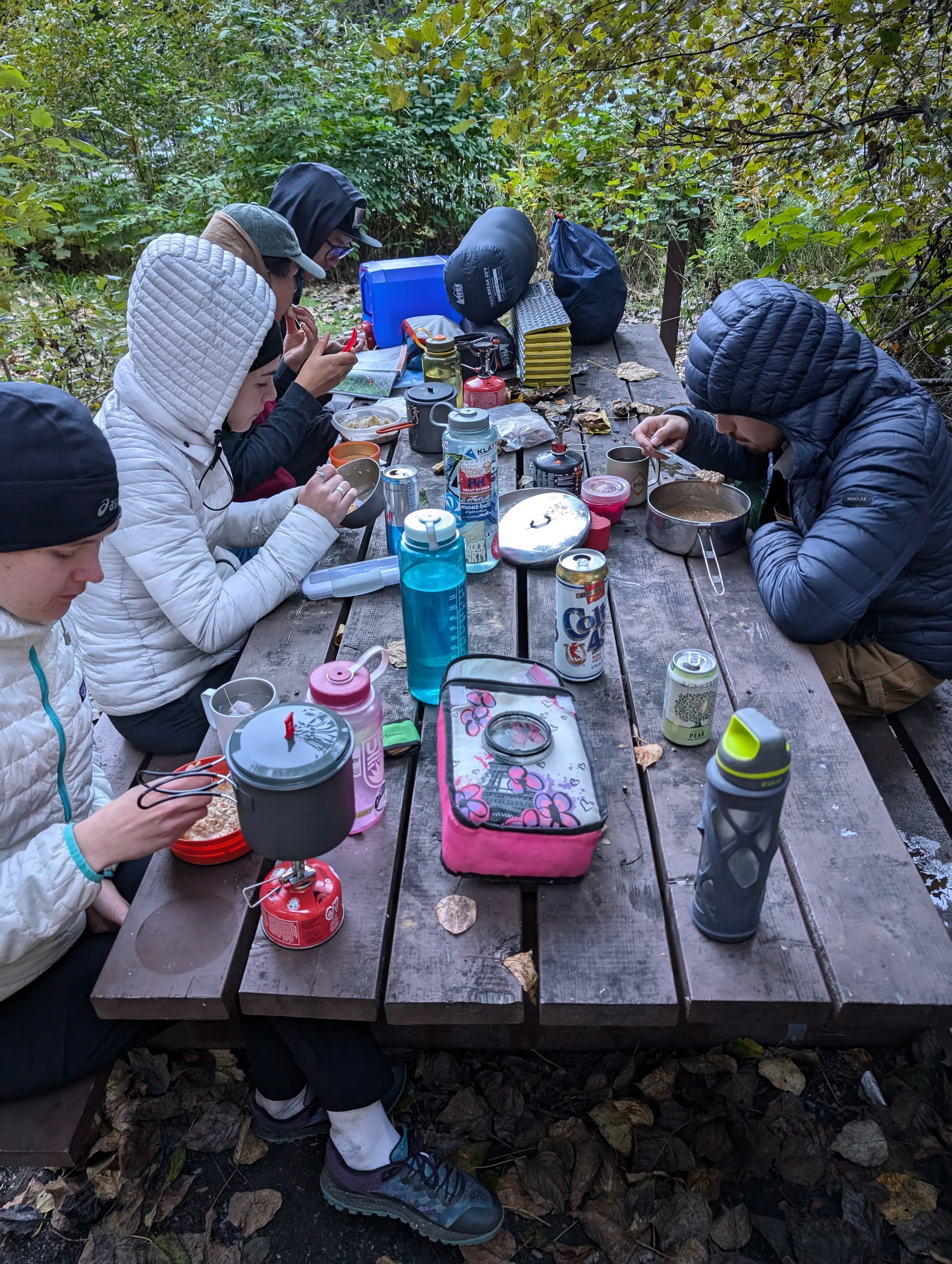
The trip began by driving up the night before (Sept. 29th) and camping in the Cheakamus Canyon campsite area so we could get an early start. We had a fire, some hot dogs, a colder-than-I-expected night’s sleep, and breakfast.
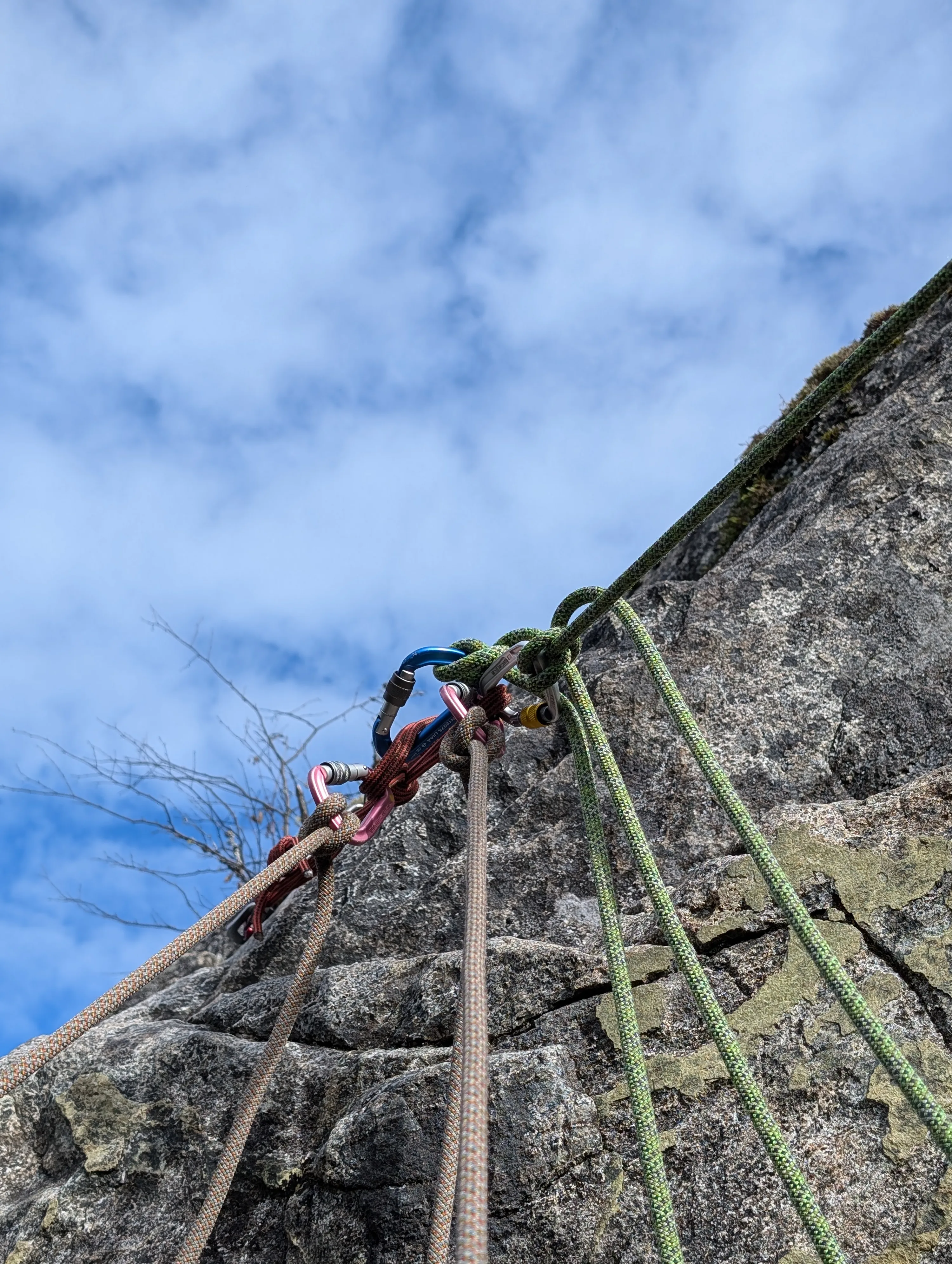
The multipitches we climbed were in Squamish, BC in Cheakamus Canyon. We started with the route Frontside 180, a 10 pitch climb rated 5.8, but in reality is probably closer to 5.6/7. It was a good place to learn and practice the technique of anchoring and top belaying.
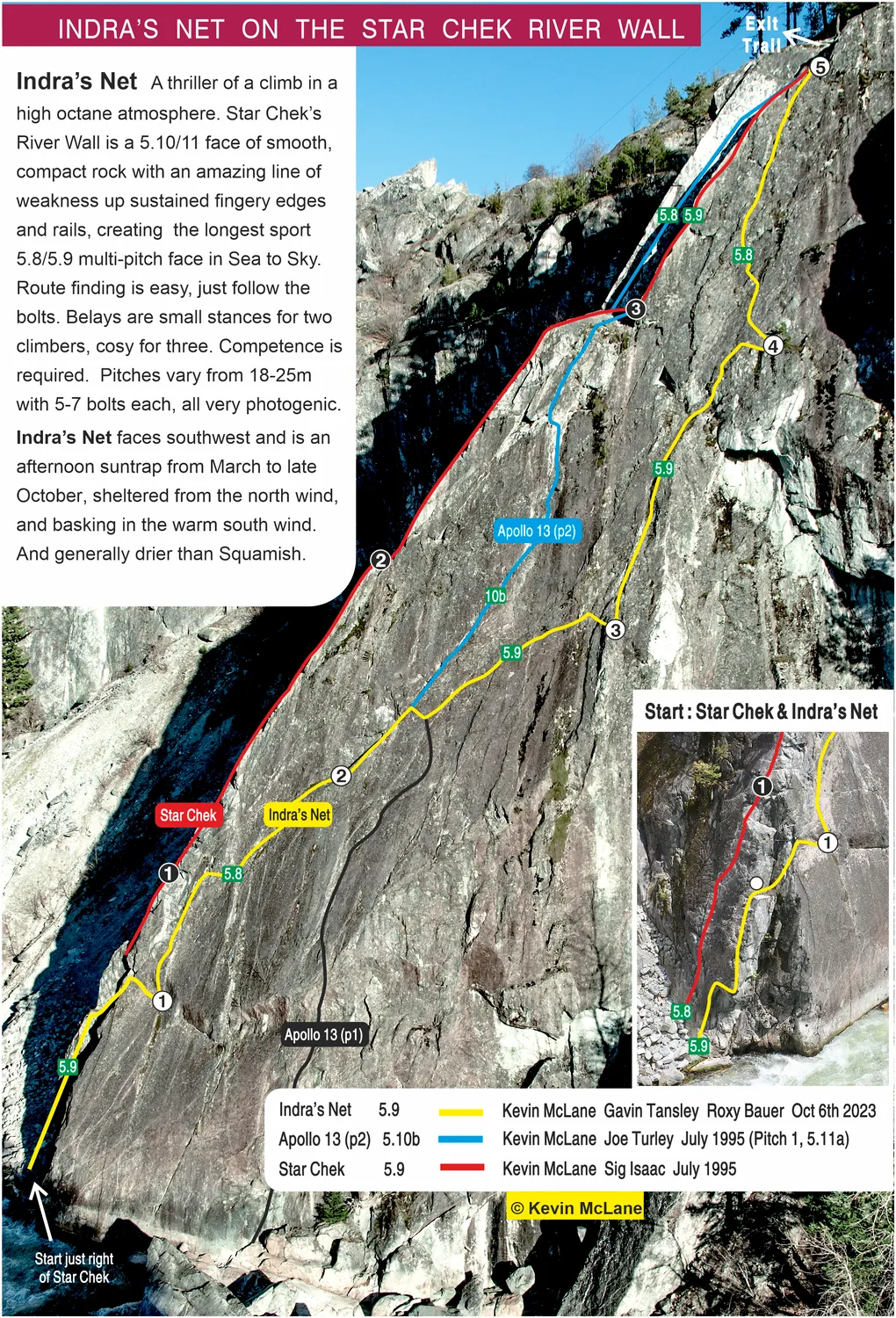
We then moved on to climb Indra’s net (route map below), a 5 pitch rated 5.9. I was the lead climber and did not study the route map beforehand, a mistake. Upon reaching the first anchor, I didn’t notice it and kept on climbing, shortly running out of quickdraws and generating massive rope drag.
I couldn’t communicate with the rest of my team because they were around a corner (out of sight), there was huge rope drag (I couldn’t give tugs or slack), and there was a loud river right below us drowing out any noise.
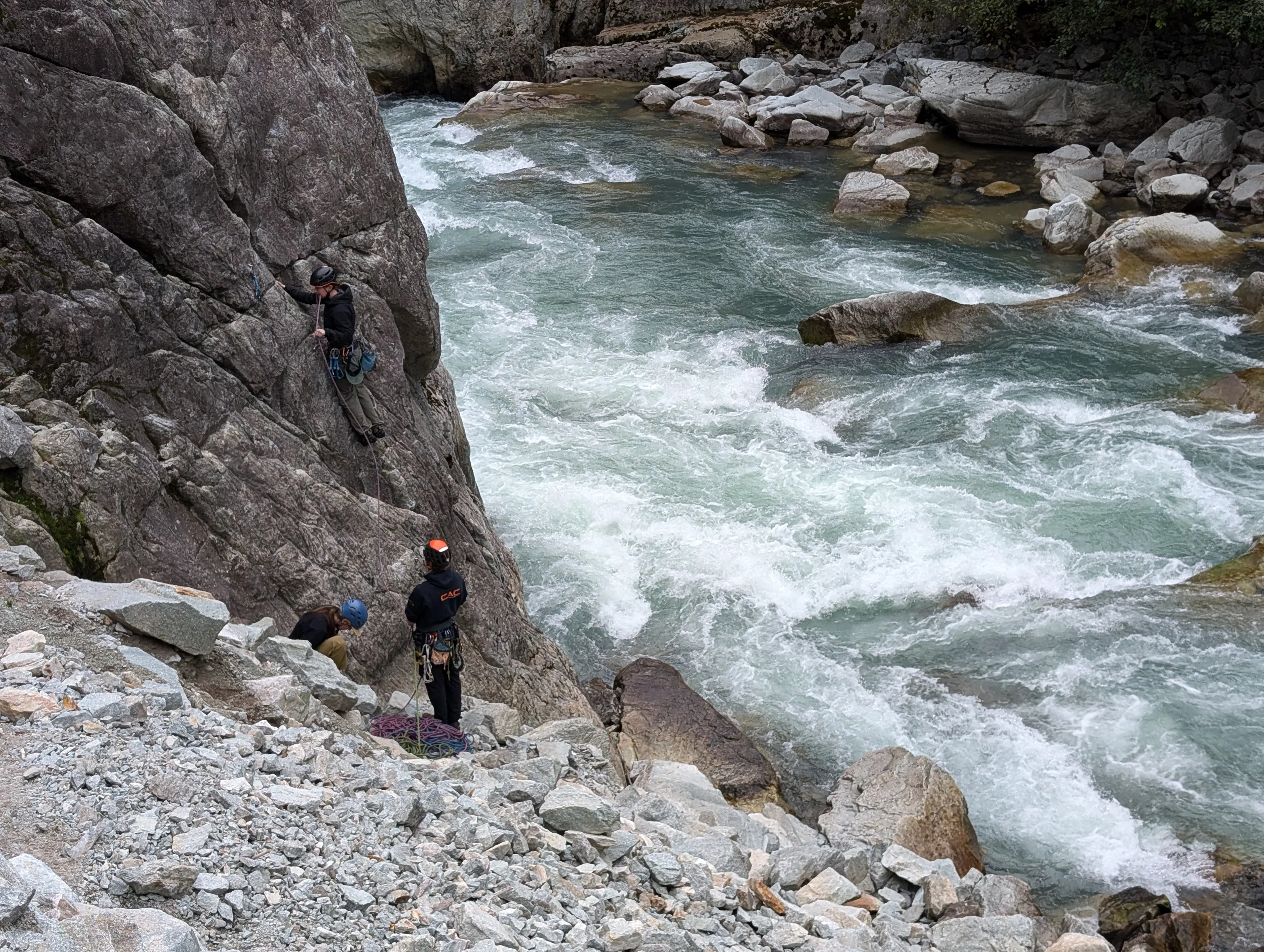
This was a little scary, since the sun was setting and we didn’t want to be out after dark. The other pair decided they would climb up and meet me, help me recover the gear, and get us back on track.
After getting re-oriented, we continued up Star Chek, a runout 4 pitch climb rated 5.9 with a stunning view. It was much more enjoyable than Frontside 180, in my opinion, very beautiful, and I would like to give Indra’s Net another try. We arrived at the top just as the sun went down and switched on our headlamps, making it out without any injuries or lost gear.
Takeaways from the trip:
- General planning, i.e., studying the route before you set out, is important, especially if you’re the leader since there will likely be limited communication
- Learn on a climb that is easy (but not too easy)
- In my opinion, Frontside 180 was a bit too easy and felt like I could walk up some pitches which detracted a bit
- You can climb waaay more doing multis compared to sport climbing
- Many more routes open up. And with them, many more beautiful views!